From Believing Your Beliefs to Borrowing Other People’s Truths

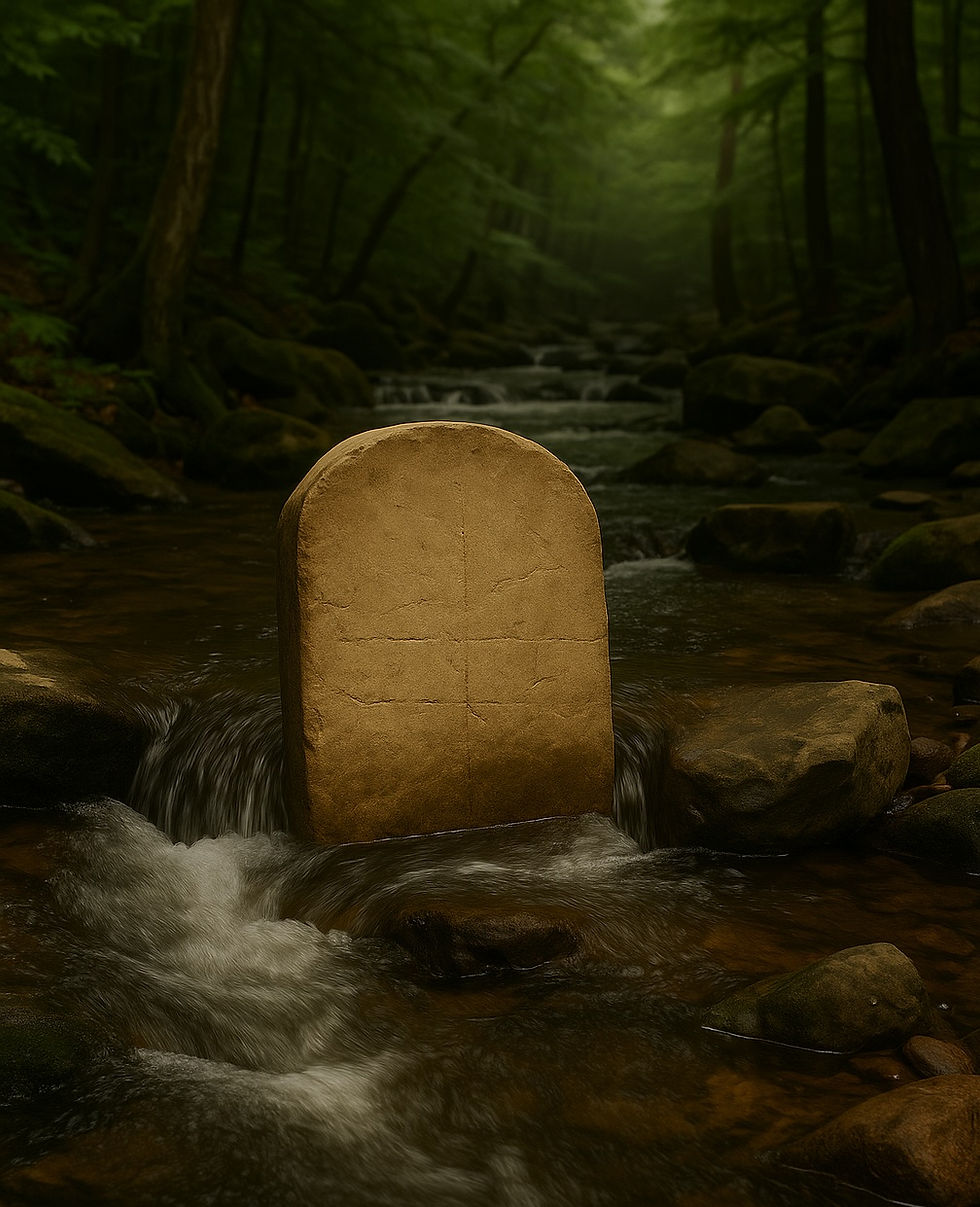
In an earlier post, I wrote about how easily we can mistake our own beliefs for truths. We polish them, defend them, and carry them around as if they were stone tablets. The trick, I suggested, is to loosen our grip and see beliefs more as lenses than absolute truths.
But then I began to wonder: where do these truths come from? And if my own beliefs can trick me, what about the ones I borrow from others?
Think of all the teachers, gurus, philosophers, or even the self-proclaimed YouTube™ “downloaders” of divine wisdom who populate our world today. Where does their knowledge come from? Is it a reminder of a lasting truth, or just pride talking confidently? How can we tell what is real and what is fake?
I think of wisdom like a circle that goes around again and again. It shows how ideas start, spread to others, become institutionalized and then often stop being as exciting.
It begins with direct experience. Someone has a raw encounter with reality—maybe under a tree like Buddha, on top of a mountain, in caves, or in the wilderness. It could be in a quiet moment when the mind finally stops buzzing. Or like when I am sitting in our Cauldron of Consciousness (hot tub), something reveals itself, not always in words but in clarity or understanding.
Next comes expression. The person tries to capture what they’ve seen in language, in stories, or in practices. I find this is the most challenging part. Words can never fully express the experience, but they can point you in the right direction.
From there, the teaching moves into transmission. Some who hear it actually test it themselves, allowing it to shape their lives. Others simply memorize the words, repeating them without the passion that originally gave them life. And for some, the words end up as inspirational quotes on their walls—nice to look at, but disconnected from the fire that birthed them.
Over time, teachings become part of the way things are done and institutionalized. Rules, books, and leaders form to organize everything. Sometimes, the ego—or simply a person’s pride—hides in these rules. Someone might say, “We are the only ones with the truth.” The original idea becomes a set of strict rules, and then this inspired idea stops flowing. It becomes still, even stagnant.
Yet wisdom refuses to stay boxed in. It waits patiently, until someone grows restless with the dead words and goes searching again. Eventually comes rediscovery. Someone strips everything back—through meditation, stillness, or their own searching—and the idea bubbles up again. It feels fresh and alive, familiar but unique. Then the cycle begins once more.
I find it helpful to imagine this process like water in a stream. A clear spring rises from the ground (Direct Experience and Expression). It flows into rivers (Transmission), gets dammed into reservoirs (Institutionalized), and sometimes stagnates. But water finds a way. It seeps through, bubbles up, and starts fresh somewhere else (Rediscovery). Every teaching we encounter is simply an idea along this stream.
So how do we know if the water we’re drinking is fresh or stale? For me, the test isn’t intellectual—it’s felt. Real wisdom doesn’t demand that I believe; it invites me to try. It carries an energy of openness. When I hear a teaching and something in me feels more spacious, connected, or alive, I take notice. When it feels rigid, heavy, or dependent on my agreement to keep someone else’s authority intact, I see the fingerprints of ego.
This is where it connects back to belief. Just as our personal beliefs are not guaranteed truths, neither are the teachings we borrow from others. They are possibilities, invitations, experiments. Some are doorways that lead into wide new landscapes. Others are mirrors, reflecting nothing more than someone else’s need for certainty.
The real task is to remain curious, neither clinging nor rejecting. Ask yourself: Does this resonate with my own direct experience? Does it make me feel more alive? Can I strip away the story and discover something timeless beneath it? And ultimately, for me, does it bring me happiness, my guiding light?
Wisdom, I’ve come to see, isn’t something to possess. It isn’t a carved commandment or a perfect book. It’s a river—bending, flooding, drying, and reappearing. Our role is not to build a fortress on one bank, but to keep tasting the water, following its current, and when possible, discovering our own hidden springs. So, are you ready to dip your toe in the river?
Forever evolving,
Gregory Loewen
The Church of Unreasonable Happiness


Comments